

An offshore earthquake with a preliminary magnitude of 7.6 struck off the coast of Davao Oriental, a southern province of the Philippines, on Friday morning. The quake prompted authorities to issue warnings of a potential hazardous tsunami in nearby areas, escalating concerns across the region.
According to the Philippine Institute of Volcanology and Seismology (PHIVOLCS), the earthquake resulted from shallow fault movement at a depth of 10 kilometres. Its epicentre was located approximately 62 kilometres southeast of Manay town, leading to fears of significant infrastructure damage and strong aftershocks.
The Pacific Tsunami Warning Center, based in Honolulu, reported that hazardous waves could reach up to 300 kilometres of the epicentre, with estimations of waves potentially rising to 3 metres above normal tide levels along certain Philippine coasts. Nearby countries, including Indonesia and Palau, might also experience smaller tsunami waves.
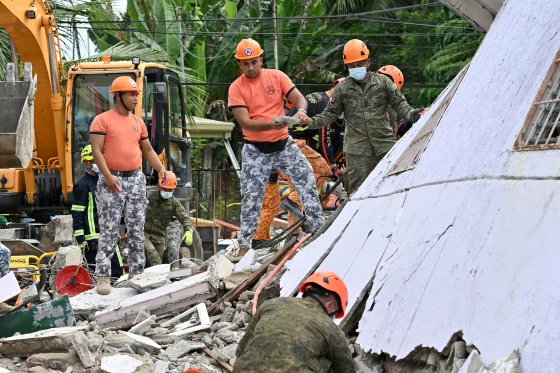
This earthquake comes as the Philippines is still in recovery from a magnitude 6.9 earthquake that occurred on September 30. That disaster resulted in the tragic loss of at least 74 lives and displaced thousands, particularly affecting residents in Bogo city and surrounding areas in the central province of Cebu.
Being situated in one of the world’s most disaster-prone regions, the Philippines lies along the Pacific “Ring of Fire”, an area notorious for frequent seismic activity. The country also faces the annual threat of approximately 20 typhoons and storms, highlighting the need for robust disaster preparedness and response mechanisms, which are essential responsibilities for both governmental and volunteer organizations.
As authorities monitor the situation closely, they have urged coastal residents to remain vigilant and adhere to evacuation protocols until the tsunami threat diminishes. The call for preparedness underscores the importance of being proactive in disaster-prone areas, aiming to minimize potential harm and loss of life.