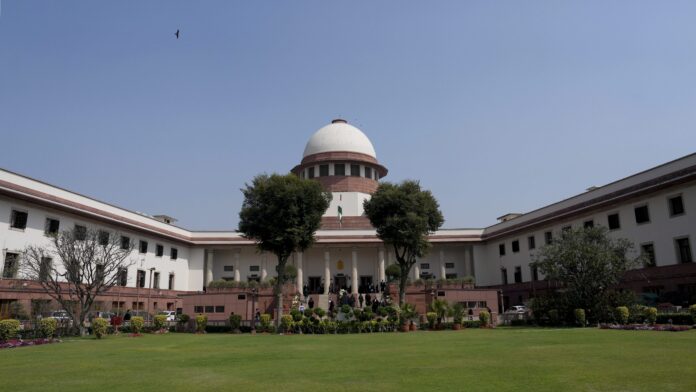


The Supreme Court of India has expressed serious concerns regarding a “growing trend” of judges issuing numerous orders just before their retirement. Chief Justice of India (CJI) Justice Surya Kant drew an analogy to a cricketer hitting sixes in the final overs of a match while presiding over a petition concerning a suspended Principal District and Sessions Judge from Madhya Pradesh.
The remarks came during a hearing on November 22, when the CJI highlighted the increasing tendency of judges to expedite orders for personal interests as they near the end of their professional tenures. “It is an unfortunate trend. There is a growing tendency of judges passing so many orders just before retirement,” he commented.
Accompanying the CJI were Justices Joymalya Bagchi and Vipul M. Pancholi. The petitioner, a judicial officer, contested his suspension that occurred merely 10 days before his scheduled retirement on November 30.
Judicial Officer Suspended Just Prior to Retirement
The suspension emerged from a Full Court decision of the Madhya Pradesh High Court, which cited two controversial orders issued by the petitioner shortly before his impending retirement. Senior advocate Vipin Sanghi defended the officer, stressing his exemplary service record and frequent commendations in Annual Confidential Reports (ACRs).
“Suspending an officer for passing judicial orders, which are appealable and can be rectified by higher courts, raises substantial concerns,” Sanghi argued.
The Supreme Court appeared to agree with the argument, asserting that typical disciplinary measures are not initiated for judicial errors. “He cannot be suspended for this. However, what if the orders are palpably dishonest?” CJI Justice Surya Kant queried, differentiating between genuine judicial mistakes and misconduct.
The High Court had previously issued a directive on November 20 to extend the retirement age of judicial officers from 60 to 61 years. Consequently, the suspended judge is now slated to retire on November 30, 2026. The CJI noted that the judge lacked knowledge of this extension when passing the disputed orders.
Litigation Path Under Review
The Bench questioned the rationale behind the officer’s choice to bypass the High Court and appeal directly to the Supreme Court over the suspension. Sanghi responded by indicating that since the suspension resulted from a Full Court decision, the petitioner believed it was prudent to seek relief from the Supreme Court.
However, the judges reminded that Full Court decisions have previously been annulled by High Courts in various judicial proceedings. They also expressed reservations about the applicant employing the Right to Information (RTI) Act to seek details on his suspension.
“It is not expected of a senior judicial officer to resort to the RTI route. He could have submitted a representation,” remarked the Bench.
Declining the Relief, Granting Liberty
Ultimately, the Supreme Court declined to entertain the petition but granted the judicial officer the liberty to file a representation against the suspension order before the Madhya Pradesh High Court. Furthermore, the Supreme Court directed the High Court to address the submission within a stipulated time frame.