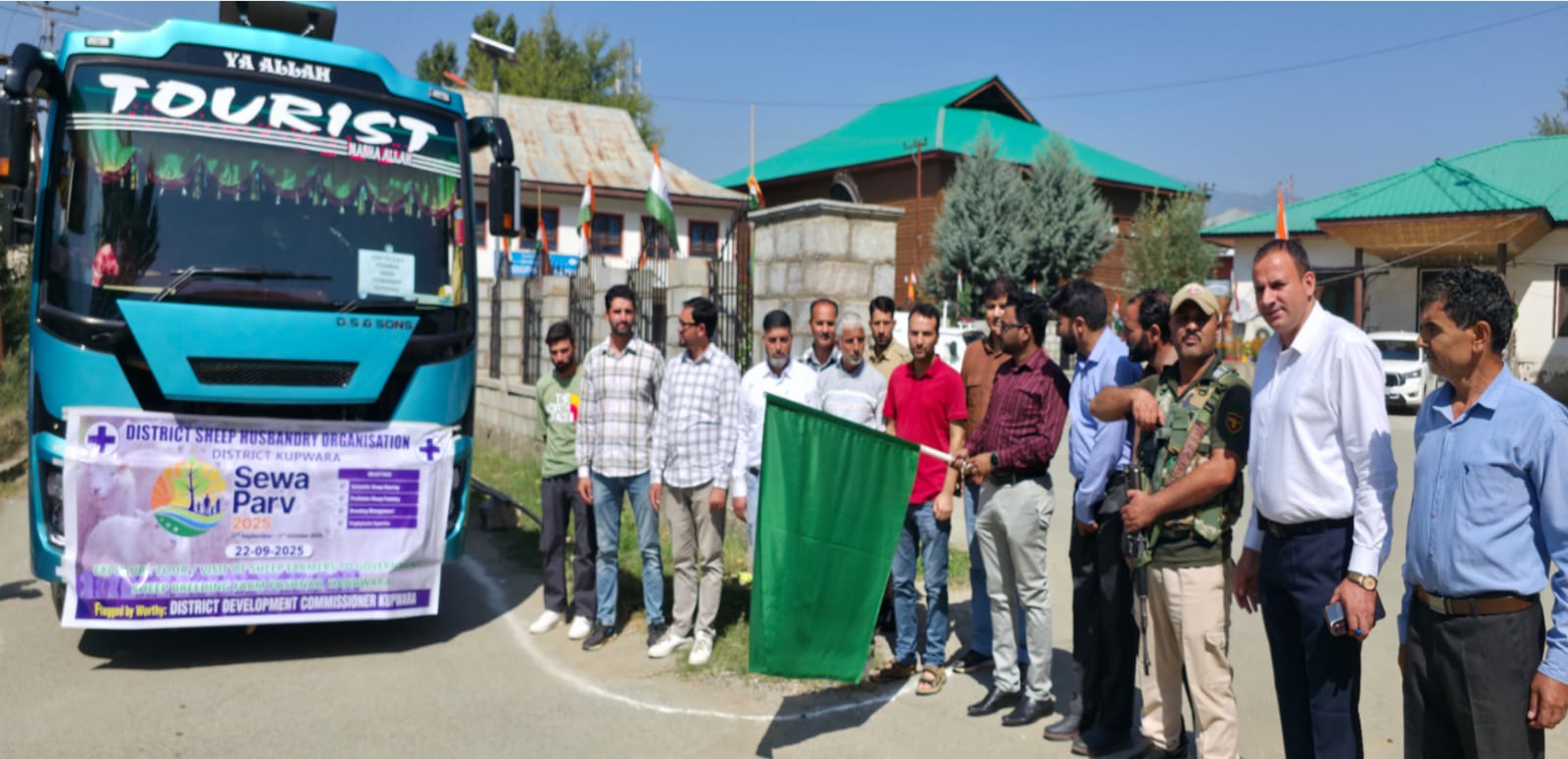


Kupwara, September 22: Deputy Commissioner Kupwara, Shrikant Suse (IAS), flagged off a group of beneficiaries from the DC Office Complex Kupwara for an exposure-cum-training visit to the Government Sheep Breeding Farm, Poshnar, Rajwar Kupwara. This important initiative, organized by the Department of Sheep Husbandry, comes under the SEWA PARV program.
During the event, DC Suse praised the department’s commitment to empowering local breeders. He assured beneficiaries of full support in adopting modern methods of sheep rearing, emphasizing the livestock sector’s potential for generating livelihoods and enhancing income levels in rural areas.
The event saw Dr. Ishrat, the District Sheep Husbandry Officer, briefing attendees about the program’s objectives. He explained that the exposure program aims to equip beneficiaries with hands-on training and practical demonstrations on various aspects of scientific sheep rearing, flock management, breeding practices, and animal health care.
Dr. Ishrat highlighted that initiatives like these enable farmers to adopt improved management practices, significantly raising productivity while ensuring better animal welfare. By focusing on practical training, the program underscores the importance of sustainable and responsible livestock management.
Technical experts from the department will facilitate interactive sessions at the farm. Beneficiaries will gain firsthand knowledge of modern techniques designed to ensure higher returns on their investments through sustainable growth in sheep husbandry. Participants will also witness innovative practices transferable to grassroots levels for significantly improved outcomes.
This initiative aligns with the Department of Sheep Husbandry’s persistent commitment to uplifting the socio-economic conditions of sheep rearers in the district. By fostering self-reliance through livestock-based entrepreneurship, the program aims to contribute positively to the strengthening of the rural economy in Kupwara. Such events not only aid in knowledge transfer but also enhance community awareness about the economic benefits of sheep rearing.