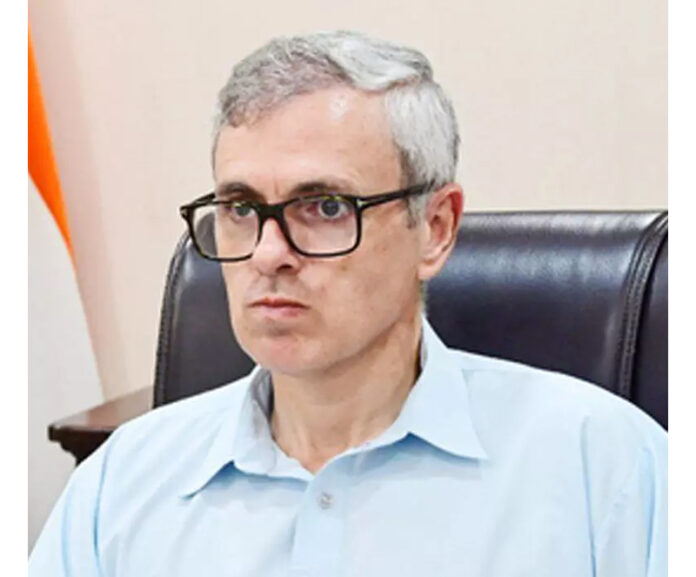


In a strongly worded statement, Jammu and Kashmir Chief Minister Omar Abdullah has called for an apology from Bihar Chief Minister Nitish Kumar regarding a controversial incident involving a woman doctor’s veil. Abdullah labeled Kumar’s actions as unacceptable, asserting the need for accountability.
The incident unfolded on Monday at the Bihar Secretariat during a government function that involved the distribution of appointment letters to AYUSH doctors. Reports indicate that Kumar allegedly pulled down the naqab of the woman doctor while questioning, “What is this?” This act has incited a wave of outrage across various sectors of society.
In response to media queries, Abdullah emphasized, “There is no justification for such behavior. How can anyone justify touching a woman’s clothing?” He revealed that the affected doctor has declined the offered appointment due to this incident, prompting Abdullah to urge Kumar to address the matter directly and apologize.
Furthermore, Abdullah criticized Union Minister and BJP leader Giriraj Singh, who defended Kumar’s action. He remarked, “One cannot expect any different response from the ruling party.” He pointed to a double standard, suggesting that had a Muslim leader behaved similarly towards a Hindu woman, there would have been widespread uproar.
“The issue is not merely about religion but revolves around the dignity and conduct expected from our leaders,” Abdullah reiterated. He questioned the motives behind Kumar’s inappropriate action and implored the Chief Minister to acknowledge his mistake.
Shifting focus to national matters, Abdullah addressed comments made by Congress leader Prithviraj Chavan, regarding the perception of defeat in aerial disputes with Pakistan. He clarified that such views reflect Chavan’s personal stance and are not representative of the Congress party’s position.
Abdullah highlighted the importance of unity among opposition parties, especially in the wake of the Pahalgam terror attack. “The opposition supported the government and our brave defence forces during this critical time,” he stated.
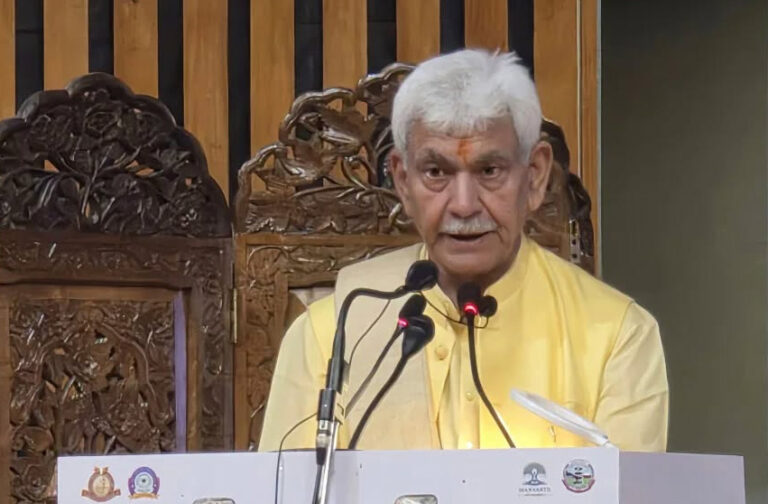
During his visit, Abdullah participated in the 11th edition of the India’s International Movement to Unite Nations (IIMUN) Role Model Series. Speaking on the “idea of India,” he reflected on Jammu and Kashmir’s historical choice to accede to India. He noted, “My state, which is predominantly Muslim, could have opted for Pakistan during Partition but chose India instead. This decision is integral to the idea of India we must protect.”
Highlighting the need for merit over religious identity, Abdullah criticized the ongoing discussions surrounding admissions in medical colleges and selections for sports teams based on religion. His comments followed controversy over the religious composition of the first MBBS batch at the Vaishno Devi Medical College, where 42 out of 50 students were Muslim.
“The only balance that matters should be based on talent, not identity,” he insisted. “The India I envision for our children is one where merit is the sole determinant of success.”
Abdullah’s remarks resonate beyond the immediate context of the veil incident. They serve as a reminder of the ongoing discourse surrounding dignity and the profound importance of maintaining respect in leadership roles.