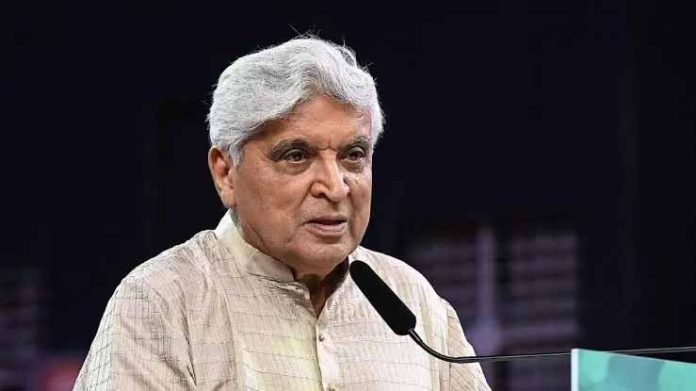


Renowned screenwriter and lyricist Javed Akhtar has made headlines by vehemently condemning the double standards in film censorship during his address at the Anantrang Mental Health Cultural Festival held on Friday. Akhtar argued that while films reflecting societal truths face scrutiny, vulgar films laden with regressive ideas easily bypass regulatory hurdles. His comments have ignited a significant discussion on the role of audiences and regulators in shaping the film industry.
“In this country, vulgarity often gets the green light from film boards. These boards fail to recognize the harmful values perpetuated through such films, which often display a male chauvinistic view that demeans women. Yet, films that merely reflect societal issues often face rejection,” Akhtar stated, underscoring the troubling pattern in cinematic censorship.
Akhtar strongly believes that films serve as mirrors to society, and should not be culpable for the realities they depict. “A film is a window into society through which you peek. Closing the window does not change what is happening outside,” he asserted, emphasizing the necessity of allowing truthful narratives to thrive.
**Impact of Hyper-Masculinity on Mental Health**
Discussing the mental health impact of hyper-masculine portrayals in films, Akhtar highlighted how such films resonate with audiences because they reflect societal approval of these narratives. “It is the mental health of men that perpetuates such films. If men’s mental health improves, not only will these films cease to exist, but also those that do make it to the screen will likely fail,” he suggested, pointing to an essential connection between societal attitudes and cinematic success.
He elaborated, “In show business, the audience is considered god. A bad audience indeed makes a bad film successful.” This remark calls attention to how audience preferences significantly influence industry standards and the kind of content that gets celebrated.
**Vulgar Songs and The Decline of Taste**
Further expressing his concerns, Akhtar voiced his disappointment over the proliferation of vulgar and suggestive songs within the industry. He recounted his refusal to work on such projects throughout his career, noting that he felt sadness at the popularity of such content. “During the 80s, many songs had double meanings, but I refused to write them. I lament the fact that those songs often became superhits, showcasing how the audience shapes the industry,” he remarked.
Referring to the controversial song ‘Choli Ke Peeche Kya Hai’, he noted that it is concerning when parents take pride in their daughters dancing to songs that represent declining societal values. “If these reflect societal values, what can we expect from films and music? Society holds responsibility; cinema is merely a manifestation,” he concluded.
**Praise for ‘Saiyaara’**
While critiquing current trends, Akhtar praised the recent film ‘Saiyaara’, directed by Mohit Suri. He found its music to be refreshingly calm and soulful, a contrast to the frantic tempo that dominates contemporary music. “The music of Saiyaara has a stillness, an old charm. Today, music has become so loud and chaotic that percussion drowns the voice. When something soothing comes along, it feels like shade in harsh sunlight,” he stated.
**Sadness and Art**
At the festival, Akhtar also philosophized about the role of sadness in artistry. He argued it is important to acknowledge sadness rather than deny it. “Denying sadness only allows it to resurface elsewhere. Earlier, every film featured a few sad songs, but now, they’ve vanished because we cling to the belief that ‘achhe din aa gaye hain’ (good days have arrived). This denial is unhealthy — one must embrace sadness and even cry if needed. That’s crucial for mental health,” he concluded, leaving many attendees in thoughtful silence.