

The Congress party on Saturday escalated its criticism of the Narendra Modi government, accusing it of misusing the funds of 30 crore Life Insurance Corporation (LIC) policyholders to favor the Adani Group. Congress has demanded that the Public Accounts Committee (PAC) of Parliament conduct an in-depth investigation into the alleged coercion of LIC for large-scale investments in the conglomerate.
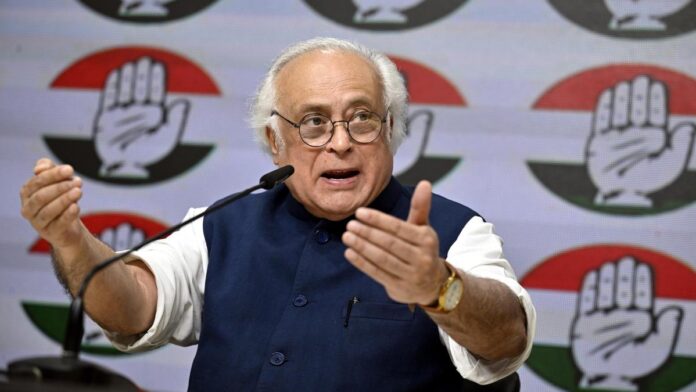
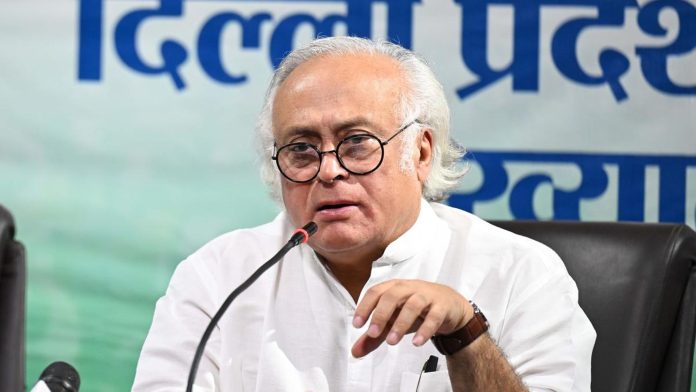
Congress General Secretary (Communications) Jairam Ramesh stated that recent media disclosures unveil how the ‘Modani joint venture systematically misused LIC and the savings of millions of Indians.’ In his assertions, Ramesh claimed that internal documents indicated officials devised a strategy to invest approximately ₹33,000 crore of LIC funds into various Adani Group entities as early as May 2025.
He explained that the investment aimed to cultivate confidence in the Adani Group and inspire other investors to join in. This raises significant concerns regarding government interventions. Ramesh also questioned the roles of the Ministry of Finance and NITI Aayog, alleging both acted under pressure to assist a private conglomerate navigating financial difficulties.
“Is this not a textbook case of ‘mobile phone banking’— where corporate interests dictate governmental decisions?” Ramesh underscored.
LIC reportedly suffered a staggering ₹7,850 crore loss within hours due to the indictment of Gautam Adani and several associates in the United States on September 21, 2024. Ramesh has accused the current administration of providing undue protection to Adani by ignoring the US SEC’s summons for nearly a year.
Additionally, Ramesh articulated grave allegations against the Adani Group, including claims of orchestrating a ₹2,000 crore bribery scheme to obtain lucrative solar power contracts.
Furthermore, he branded the situation as a “Modani MegaScam,” suggesting the alleged wrongdoing encompasses much more than just LIC’s financial interests. The Congress leader detailed specific areas of concern, including:
- Misuse of central agencies such as the ED, CBI, and Income Tax Department to compel private sector firms to sell assets to the Adani Group.
- Manipulation of privatization processes for critical infrastructure projects to benefit Adani.
- Diplomatic efforts to secure international contracts for the Adani Group.
- Excessive invoicing of coal imports via affiliates, leading to inflated electricity prices in Gujarat.
- Pre-election energy supply contracts at inflated rates across Madhya Pradesh, Rajasthan, and Maharashtra.
- Allocation of land for power projects at merely ₹1 per acre in election-vulnerable Bihar.
Ramesh stressed the necessity for a Joint Parliamentary Committee (JPC) investigation, a demand that has persisted since the inception of the Congress’s “Hum Adani Ke Hain Kaun” (HAHK) campaign three years ago. In his conclusion, he insisted that, as a preliminary measure, the PAC must ascertain how LIC came to be compelled into these controversial investments.
As of now, there has been no immediate response from the Adani Group or the Union government regarding these serious allegations. With public sentiment rapidly heating up, the demand for transparency in this matter may become a focal point for political discourse ahead of future elections.