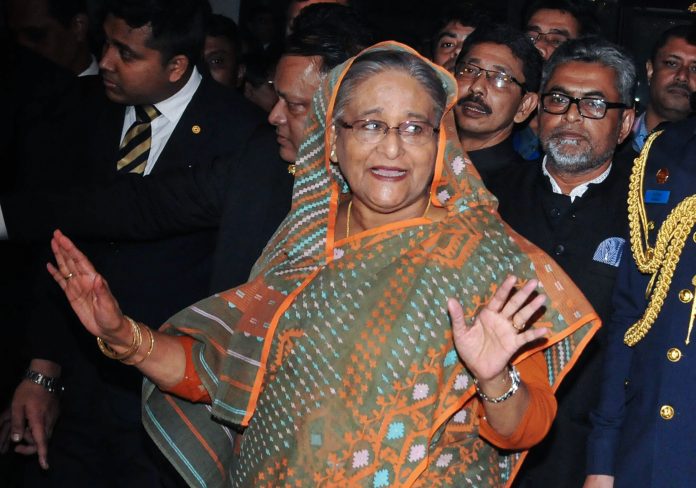


Ousted former Bangladeshi Prime Minister Sheikh Hasina has stated that her return to the country hinges on the restoration of “participatory democracy” and the lifting of the ban on her party, the Awami League. In an exclusive interview with PTI, Hasina elaborated on her conditions, which include conducting free, fair, and inclusive elections.
Currently residing in India, Hasina accused the interim administration led by Dr. Muhammad Yunus of damaging Bangladesh’s crucial ties with India. She pointed out that Yunus’ government empowers extremist groups and threatens the strategic partnership between the two neighboring nations.
“I extend my sincere gratitude to the Indian government and its people for their hospitality,” Hasina acknowledged, emphasizing her appreciation for the refuge provided by India after her departure from Bangladesh on August 5, 2024.
Hasina, who has served as Bangladesh’s prime minister longer than anyone else, said, “The most important condition for my return is the same that the Bangladeshi people require: a return to participatory democracy.” She firmly believes that lifting the ban on the Awami League and ensuring inclusive elections are non-negotiable prerequisites for her comeback.
Violence and protests preceding her ouster prompted her exit, she reflected. “We lost control of the situation, and that was regrettable,” she admitted when questioned about her government’s handling of the protests. Hasina attributed the unrest to “seasoned political firebrands masquerading as student leaders” who exacerbated tensions.
On allegations that she has called for a boycott of the upcoming elections in February, Hasina categorically dismissed the claims. She expressed that any election conducted without the participation of the Awami League would inherently lack legitimacy. “Tens of millions of people support us; excluding us would be a missed opportunity for Bangladesh to have a government representing genuine popular consent,” she emphasized.
She launched a pointed critique against Dr. Yunus, accusing him of hostility towards India, which she described as foolish. Hasina stated, “Yunus’ antagonism towards India is self-defeating… He is unelected, chaotic, and dependent on extremist forces,” warning that such a stance jeopardizes bilateral relations.
In an effort to reassure the Indian populace concerned about the recent political upheaval in Bangladesh, she affirmed, “The interim government does not represent the sentiment of our people. India is and will remain our nation’s most significant ally.”
Hasina expressed her readiness to stand trial under international supervision, even at the ICC, criticizing Yunus for avoiding impartial scrutiny. She insisted that an unbiased tribunal would likely clear her name of allegations surrounding the Bangladesh International Crimes Tribunal, which has sought her execution. Labeling the tribunal a “kangaroo court,” Hasina claimed it serves as a tool for the current administration to eliminate political opposition.
“The desire to use the death penalty against dissenters reflects their utter disregard for democracy and due process,” she contended. Hasina added that Yunus previously garnered passive support from some Western liberals, but noted that such backing is dwindling as they witness his administration’s shift towards radicalization.
In summary, Sheikh Hasina’s desire to return to Bangladesh hinges on significant political changes. She emphasizes democracy’s role in securing her political future while firmly addressing the challenges posed by the current interim leadership.