
21.3 C
Jammu
Friday, October 30, 2026

Mehbooba Mufti Hits Back at PM Modi’s Youth Remarks

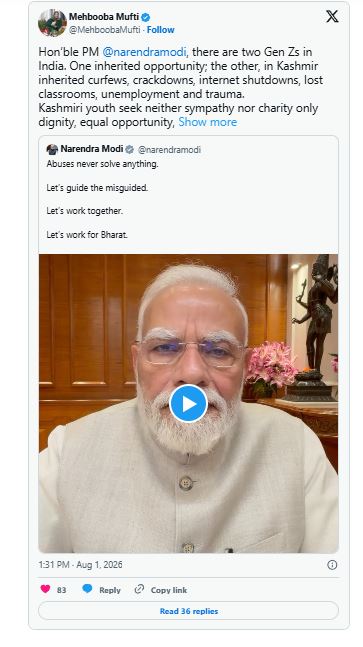
On a recent exchange regarding the youth in India, Peoples Democratic Party (PDP) chief Mehbooba Mufti sharply criticized Prime Minister Narendra Modi for his comments about young people. In a video posted on X, Modi spoke about forgiving students who used profanity during a protest at Jantar Mantar. In response, Mufti emphasized the stark contrast between two Generation Zs in India—those with countless opportunities and the other, particularly in Kashmir, facing significant challenges.

Mufti’s remarks come as she highlighted that Kashmiri youth do not seek pity or charity but rather demand equal opportunities. She stated, “Hon’ble PM @narendramodi, there are two Gen Zs in India. One inherited opportunities; the other, in Kashmir, inherited curfews, crackdowns, internet shutdowns, lost classrooms, unemployment, and trauma.” This statement reflects ongoing frustrations faced by the youth in the region, battling not only economic challenges but also social and political constraints.

During a press briefing, Mufti elaborated on the harsh realities that Kashmiri students endure. “Kashmiri youth seek neither sympathy nor charity, only dignity, equal opportunity, political space, and the freedom to dream without fear,” she stressed. These sentiments resonate deeply with young people in Kashmir, who often feel marginalized and sidelined in national discourse.

Mufti’s critique goes beyond a mere disagreement with Modi’s approach; it calls for a fundamental re-evaluation of policies affecting the youth in Kashmir. She argues that if India is to cultivate a compassionate future, it must begin by addressing the systemic issues faced by its young people in conflict-ridden areas like Kashmir.

With unemployment rates soaring and educational disruptions continuing, the concerns raised by Mufti strike a chord with many. As a demographic that constitutes a significant portion of India’s population, the experiences of Gen Z in Kashmir warrant urgent attention from policymakers.

Mufti’s comments resonate as voices of young people go unheard in mainstream conversations. Their struggles tell a different story from the one often portrayed in national media. It is essential to recognize the unique challenges that this segment of the population faces, cultivating inclusive themes of national dialogue.

The dialogue surrounding Kashmiri youth, particularly in light of Mufti’s comments, emphasizes the need for equitable access to opportunities. As political leaders discuss the future, it is crucial to acknowledge that true compassion must give rise to actionable policies that empower rather than marginalize.

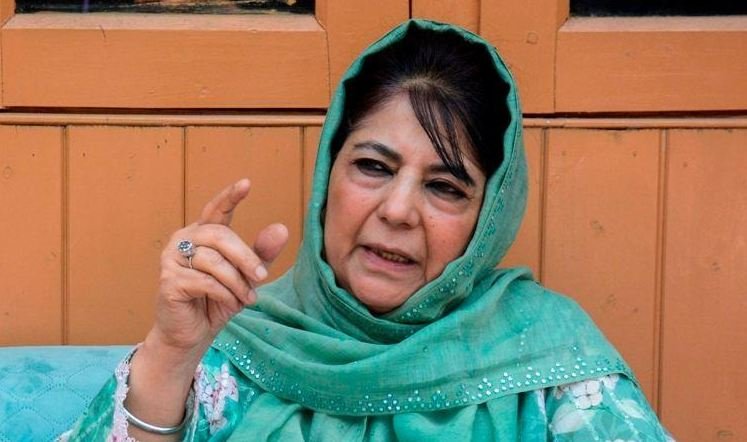
Mehbooba Mufti addressing the media about Kashmiri youth

Related Articles

- Advertisement -spot_img

Latest Articles

Mehbooba Mufti Hits Back at PM Modi’s Youth Remarks

On a recent exchange regarding the youth in India, Peoples Democratic Party (PDP) chief Mehbooba Mufti sharply criticized Prime Minister Narendra Modi for his comments about young people. In a video posted on X, Modi spoke about forgiving students who used profanity during a protest at Jantar Mantar. In response, Mufti emphasized the stark contrast between two Generation Zs in India—those with countless opportunities and the other, particularly in Kashmir, facing significant challenges.

Mufti’s remarks come as she highlighted that Kashmiri youth do not seek pity or charity but rather demand equal opportunities. She stated, “Hon’ble PM @narendramodi, there are two Gen Zs in India. One inherited opportunities; the other, in Kashmir, inherited curfews, crackdowns, internet shutdowns, lost classrooms, unemployment, and trauma.” This statement reflects ongoing frustrations faced by the youth in the region, battling not only economic challenges but also social and political constraints.

During a press briefing, Mufti elaborated on the harsh realities that Kashmiri students endure. “Kashmiri youth seek neither sympathy nor charity, only dignity, equal opportunity, political space, and the freedom to dream without fear,” she stressed. These sentiments resonate deeply with young people in Kashmir, who often feel marginalized and sidelined in national discourse.

Mufti’s critique goes beyond a mere disagreement with Modi’s approach; it calls for a fundamental re-evaluation of policies affecting the youth in Kashmir. She argues that if India is to cultivate a compassionate future, it must begin by addressing the systemic issues faced by its young people in conflict-ridden areas like Kashmir.

With unemployment rates soaring and educational disruptions continuing, the concerns raised by Mufti strike a chord with many. As a demographic that constitutes a significant portion of India’s population, the experiences of Gen Z in Kashmir warrant urgent attention from policymakers.

Mufti’s comments resonate as voices of young people go unheard in mainstream conversations. Their struggles tell a different story from the one often portrayed in national media. It is essential to recognize the unique challenges that this segment of the population faces, cultivating inclusive themes of national dialogue.

The dialogue surrounding Kashmiri youth, particularly in light of Mufti’s comments, emphasizes the need for equitable access to opportunities. As political leaders discuss the future, it is crucial to acknowledge that true compassion must give rise to actionable policies that empower rather than marginalize.

Mehbooba Mufti addressing the media about Kashmiri youth

Related Articles

- Advertisement -spot_img

Latest Articles