
Law enforcement agencies have arrested 254 foreign nationals in drug trafficking cases throughout the National Capital Region since 2024, with narcotics valued at over ₹40.53 crore confiscated. The government disclosed this information in a written reply to the Lok Sabha on Tuesday.
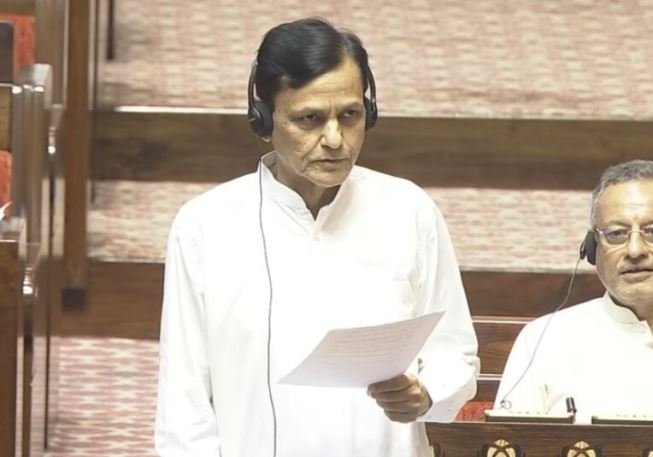
The arrests highlight a significant trend, revealing a growing concern over illegal drug trafficking involving foreign nationals. Minister of State for Home Affairs Nityanand Rai emphasized that between 2024 and June 30, 2026, 254 foreign nationals faced arrest as a result of stringent law enforcement measures.
Prominent among the arrested are individuals of Nigerian descent, who were apprehended from neighborhoods like Khanpur Extension, Deoli, Sangam Vihar, and Uttam Nagar in west Delhi. Data shows a yearly breakdown of arrests, with 40 occurring in 2024, 35 in 2025, and 15 in the first half of 2026.
The seizures consisted of various drugs, including heroin, cocaine, MDMA, and charas, amounting to an estimated ₹12.75 crore in 2024, ₹14.27 crore in 2025, and ₹13.50 crore in early 2026.
In response to concerns about safety and security, officials found 103 foreign nationals residing in rented accommodation without the mandatory tenant verification, resulting in actions taken against 63 landlords. The Delhi Police conducts regular tenant verifications to uphold law and order.
Further underscoring the government’s commitment to combating drug trafficking, Minister Rai shared details about the “Zero Tolerance” policy. The Narcotics Control Bureau (NCB) has adopted an intelligence-led and technology-driven strategy to dismantle drug networks operating through the darknet and other encrypted platforms.
The NCB has engaged cyber experts to thoroughly investigate drug trafficking facilitated through the darknet, focusing on cryptocurrency transactions. Rai expressed confidence in the initiative, stating that dedicated Darknet and Cryptocurrency Cells will be integrated into all Anti-Narcotics Task Forces.
In collaboration with the US Drug Enforcement Administration and Rashtriya Raksha University, the NCB has initiated specialized training programs covering cyber-enabled narcotics investigations and digital forensics. These efforts reflect a proactive stance in addressing the evolving nature of drug trafficking.
The government’s Vision Document outlines a comprehensive three-year roadmap aimed at curbing drug trafficking. It emphasizes a holistic approach, detailing strategies to strengthen international cooperation, enhance financial investigations, and promote the 24/7 MANAS national narcotics helpline.
The document also encourages initiatives like the Mission Drug-Free Campus in educational institutions, reinforcing the government’s commitment towards a drug-free society.
With the alarming surge in drug-related activities, the government continues to intensify its strategy, combining technology and community partnership to fight against narcotics proliferation. The alarming statistics regarding foreign nationals involved in drug trafficking serve as a stark reminder of the challenges faced by Indian law enforcement in the fight against drugs.