
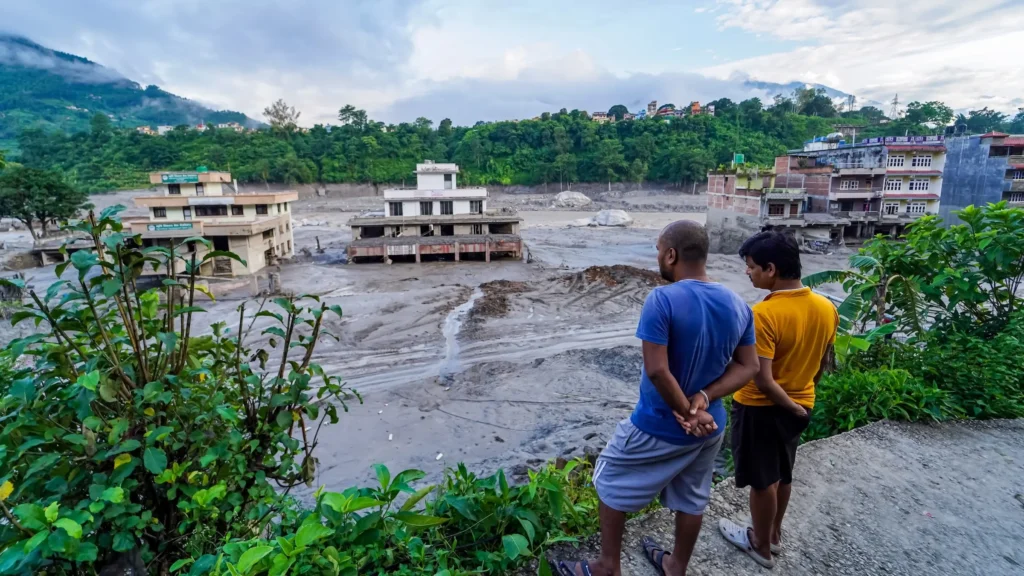
Nepal’s recent flash floods have claimed 1,344 lives, while nearly 4,900 people remain unaccounted for, as of Saturday. Rescue teams are working tirelessly to locate survivors across affected districts following devastating weather events.
The tragedy unfolded after an ice-rock avalanche on August 26 triggered catastrophic flooding near the Nepal-Tibet border. This natural disaster inundated the Bhotekoshi River and significant downstream areas, wreaking havoc on communities, infrastructure, and hydropower projects.
According to Nepal’s National Disaster Risk Reduction and Management Authority, rescue operations have successfully brought over 13,000 individuals to safety from impacted regions.
Among the deceased, officials reported 758 adults and 85 children. Alarmingly, authorities found 501 bodies that exhibited severe deterioration, likely due to extended exposure to water and debris pressure.
Authorities have temporarily buried 1,030 bodies after completing necessary identification procedures, including DNA sampling.
Chitwan district has experienced the most significant casualties, with around 360 bodies retrieved. Recovery efforts extend to other regions, including Rasuwa, Nuwakot, Dhading, Gorkha, and Tanahun, highlighting the widespread impact of the disaster.
Worryingly, figures indicate that more than 600 children are among the missing, predominantly from Rasuwa and Nuwakot districts. Authorities are closely monitoring river conditions across various regions, including the Koshi, Narayani, and Bagmati rivers, to prevent further tragedies.
As rescue operations enter their 11th day, joint efforts led by the Nepal Army continue to focus on hydropower facilities. Hundreds of workers remain trapped within tunnels, creating a dire situation that necessitates immediate action.
On Friday, hope emerged when rescue teams found two men alive inside a tunnel at the Trishuli 3A hydropower project. The Nepal Army identified the survivors as Kabir Maharjan, 45, and Sanjay Sah, 30, both of whom played crucial roles in the operation.
Contributions from Indian and Chinese experts have bolsteredNepal’s rescue teams, enhancing their operational capabilities amidst ongoing recovery efforts.
An Indian rescue team worked alongside the Nepal Army to establish a temporary access route inside the Chilime tunnel in Rasuwa district, facilitating the movement of heavier equipment to aid recovery operations.
Reportedly, the disaster has also affected China, with at least 21 lives lost and over 500 individuals missing in Tibet, as reflected in Chinese media.
Search operations persist, with authorities diligently retrieving additional bodies and analyzing rising river levels. The situation remains critical in the most affected areas as rescuers aim to locate any remaining survivors.