
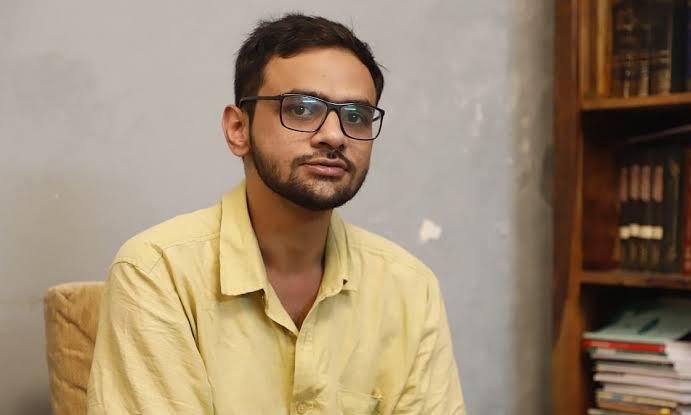
The Delhi High Court has sought the response of city police regarding the bail plea of activist Umar Khalid. Khalid is facing charges under the Unlawful Activities (Prevention) Act (UAPA) related to the alleged conspiracy behind the February 2020 riots in north-east Delhi.
On Friday, a bench comprising Justices Prathiba M Singh and Vikas Mahajan issued a notice for the police to file their stance within two weeks. Khalid’s counsel stated this is his third application for bail since his arrest in September 2020, highlighting the gravity of his situation.
The court is scheduled to hear Khalid’s plea on August 27, coinciding with the bail application of co-accused Sharjeel Imam. Khalid’s team has challenged the trial court’s decision from July 4, which dismissed his bail plea.
Additional Solicitor General S V Raju, representing the Delhi Police, noted that Imam’s bail was also denied by the same trial court, suggesting both cases may be addressed simultaneously.
Khalid faces serious allegations, being named as one of the masterminds behind the February riots that resulted in over 53 fatalities and left more than 700 injured. The unrest stemmed from protests against the Citizenship (Amendment) Act (CAA) of 2019, and the proposed National Register of Citizens (NRC).
Alongside Khalid, other activists such as Sharjeel Imam, Khalid Saifi, and former AAP councillor Tahir Hussain have been implicated in the ongoing investigation being conducted by the Delhi Police’s Special Cell.
The trial court, on July 4, ruled that it had to adhere to a Supreme Court order from January 5, which limited its ability to entertain Khalid’s bail request. This decision was crucial in establishing legal precedents for cases under the UAPA.
On September 2, the same high court division bench denied Khalid bail again, a decision subsequently upheld by the Supreme Court. The apex court granted relief to co-accused individuals, indicating that different levels of participation exist among the accused.
The bench of Justices Aravind Kumar and N V Anjaria underscored that there appears to be a prima facie case against Khalid and Imam under the UAPA. The court clarified that not all accused can be treated equally, referencing the distinct roles played by each participant in the alleged conspiracy.
As the hearings proceed, the legal battle surrounding Khalid’s case continues to unfold amid ongoing debates about civil rights, the implications of anti-terror laws, and the consequences of political dissent in India.