
21.3 C
Jammu
Friday, October 30, 2026

Large Parts of India Freed from Terrorism: LG Manoj Sinha

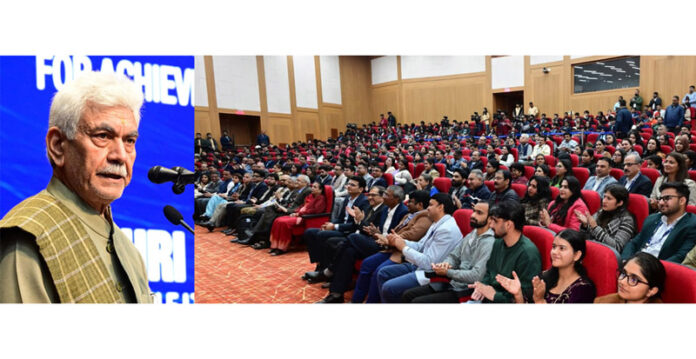
Lieutenant Governor Manoj Sinha addressed a conference at IIM Jammu on Monday, declaring that terrorism has dramatically declined across large parts of India, with local recruitment into terrorist ranks in Jammu and Kashmir nearly at nil. This statement marks a significant shift in national security, with Sinha emphasizing the ongoing efforts to keep the nation safe.

Speaking at the three-day Strategic Management Forum (SMF) Conference, Sinha outlined how the threat of terrorism, especially in the northeastern states, has largely dissipated. He acknowledged that while a few pockets remain vulnerable, the turbulence of past years has calm significantly.

“Large parts of the country have been freed from terrorism. Except for a few pockets, most of the northeast has become terrorism-free,” Sinha stated confidently. He highlighted the diminishing presence of left-wing extremism and Naxalism, which once strived to establish a corridor stretching from Hyderabad to Nepal. “This threat now primarily exists in just two or three districts,” he explained.

Turning his focus to Jammu and Kashmir, the Lieutenant Governor reassured the public that no top commanders of terrorist groups remain active in the region today. “Local recruitment into terrorism has seen a sharp decline. Hardly one or two youths are being recruited now,” Sinha revealed, indicating a successful combat strategy.

Despite this progress, Sinha cautioned against complacency, noting that Pakistan continues to attempt infiltration through the border. “Those coming from across the border hide in dense forests and rugged mountains. I assure you they will be eliminated. No matter how long it takes, they will not survive,” he added emphatically.

He also mentioned the changing nature of terrorism, stating that educated individuals increasingly participate in these activities. Sinha emphasized that combating terrorism requires a collective effort. “The fight against terrorism cannot rely solely on security forces in regions like Jammu and Kashmir or parts of Karnataka and Kerala,” he said. He called for societal involvement and contributions from administrative branches.

Sinha further urged a shift away from the divisive “insider-outsider” narrative that he believes hinders progress. He remarked, “Such thinking creates hurdles in the development process that all regions must navigate.”

During his address, the LT Governor underscored India’s ambitious development trajectory aimed at achieving Viksit Bharat by 2047. He stressed that policymakers and business leaders must step up to tackle the challenges of a rapidly evolving economy.

“Our primary focus should be on macroeconomic stability, high investments in education and health, and leveraging digital tools for participatory governance,” he stated. He commended the ongoing industrial growth under Prime Minister Narendra Modi’s leadership, stating, “There is renewed confidence among industry leaders, while sectors like manufacturing and handloom now compete on a global scale.”

In regards to Jammu and Kashmir’s economic growth, Sinha emphasized the need to harness its mining potential. “J&K possesses immense reserves of limestone, sapphire, lithium, and other minerals. Through strategic planning, we can generate an additional Rs 15,000 crore to Rs 20,000 crore annually over the next five to seven years,” he predicted.

He also recommended optimizing the hydropower sector and adapting the Holistic Agriculture Development Programme (HADP) to meet changing economic necessities.

To celebrate cultural heritage, Sinha inaugurated the Basohli Painting Exhibition. He praised the attendees’ efforts to promote traditional art forms, stating, “Basohli Painting is a priceless artistic heritage that holds immense value for current and future generations.”

The event saw participation from various dignitaries, including Prof B.S. Sahay (Director, IIM Jammu), R.K. Chaudhary (Chairman, JERC J&K and Ladakh), and several other academicians, policymakers, artists, and students. This assembly highlighted a collaborative approach towards both development and cultural preservation.


Related Articles

- Advertisement -spot_img

Latest Articles

Large Parts of India Freed from Terrorism: LG Manoj Sinha

Lieutenant Governor Manoj Sinha addressed a conference at IIM Jammu on Monday, declaring that terrorism has dramatically declined across large parts of India, with local recruitment into terrorist ranks in Jammu and Kashmir nearly at nil. This statement marks a significant shift in national security, with Sinha emphasizing the ongoing efforts to keep the nation safe.

Speaking at the three-day Strategic Management Forum (SMF) Conference, Sinha outlined how the threat of terrorism, especially in the northeastern states, has largely dissipated. He acknowledged that while a few pockets remain vulnerable, the turbulence of past years has calm significantly.

“Large parts of the country have been freed from terrorism. Except for a few pockets, most of the northeast has become terrorism-free,” Sinha stated confidently. He highlighted the diminishing presence of left-wing extremism and Naxalism, which once strived to establish a corridor stretching from Hyderabad to Nepal. “This threat now primarily exists in just two or three districts,” he explained.

Turning his focus to Jammu and Kashmir, the Lieutenant Governor reassured the public that no top commanders of terrorist groups remain active in the region today. “Local recruitment into terrorism has seen a sharp decline. Hardly one or two youths are being recruited now,” Sinha revealed, indicating a successful combat strategy.

Despite this progress, Sinha cautioned against complacency, noting that Pakistan continues to attempt infiltration through the border. “Those coming from across the border hide in dense forests and rugged mountains. I assure you they will be eliminated. No matter how long it takes, they will not survive,” he added emphatically.

He also mentioned the changing nature of terrorism, stating that educated individuals increasingly participate in these activities. Sinha emphasized that combating terrorism requires a collective effort. “The fight against terrorism cannot rely solely on security forces in regions like Jammu and Kashmir or parts of Karnataka and Kerala,” he said. He called for societal involvement and contributions from administrative branches.

Sinha further urged a shift away from the divisive “insider-outsider” narrative that he believes hinders progress. He remarked, “Such thinking creates hurdles in the development process that all regions must navigate.”

During his address, the LT Governor underscored India’s ambitious development trajectory aimed at achieving Viksit Bharat by 2047. He stressed that policymakers and business leaders must step up to tackle the challenges of a rapidly evolving economy.

“Our primary focus should be on macroeconomic stability, high investments in education and health, and leveraging digital tools for participatory governance,” he stated. He commended the ongoing industrial growth under Prime Minister Narendra Modi’s leadership, stating, “There is renewed confidence among industry leaders, while sectors like manufacturing and handloom now compete on a global scale.”

In regards to Jammu and Kashmir’s economic growth, Sinha emphasized the need to harness its mining potential. “J&K possesses immense reserves of limestone, sapphire, lithium, and other minerals. Through strategic planning, we can generate an additional Rs 15,000 crore to Rs 20,000 crore annually over the next five to seven years,” he predicted.

He also recommended optimizing the hydropower sector and adapting the Holistic Agriculture Development Programme (HADP) to meet changing economic necessities.

To celebrate cultural heritage, Sinha inaugurated the Basohli Painting Exhibition. He praised the attendees’ efforts to promote traditional art forms, stating, “Basohli Painting is a priceless artistic heritage that holds immense value for current and future generations.”

The event saw participation from various dignitaries, including Prof B.S. Sahay (Director, IIM Jammu), R.K. Chaudhary (Chairman, JERC J&K and Ladakh), and several other academicians, policymakers, artists, and students. This assembly highlighted a collaborative approach towards both development and cultural preservation.

Related Articles

- Advertisement -spot_img

Latest Articles