
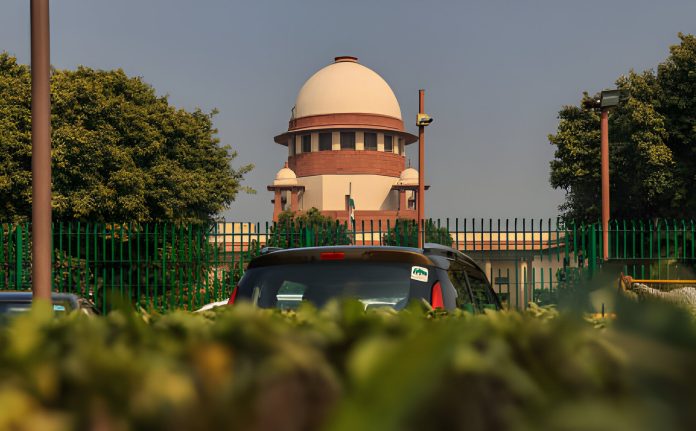
The Supreme Court of India took a significant step on Wednesday by referring the pressing issue of direct anticipatory bail applications to a three-judge bench. The question revolves around whether litigants can directly approach high courts for anticipatory bail or if they must first seek relief from the sessions court.
This decision came from a bench consisting of Justices Vikram Nath and Sandeep Mehta, who emphasized the necessity of examining the matter by a larger bench. “This matter requires to be heard by a three-judge bench,” stated the court.
Earlier, the apex court appointed senior advocate Siddharth Luthra as amicus curiae to provide assistance regarding this intricate issue.
Kerala High Court’s Unique Practice Under Scrutiny
The Supreme Court expressed apprehensions on September 8 about a prevalent practice within the Kerala High Court. The court noted that the Kerala High Court frequently entertains anticipatory bail applications directly, which raises legal concerns. “One issue that is bothering us is that in the Kerala High Court, anticipatory bail applications are regularly entertained directly. Why is that so?” queried the bench.
The court highlighted the necessity for adherence to a structured legal hierarchy concerning bail applications. Referring to relevant provisions in both the traditional Code of Criminal Procedure and the new Bharatiya Nagarik Suraksha Sanhita (BNSS), 2023, the bench elaborated on the clear hierarchy established for bail requests. Specifically, Section 482 of the BNSS outlines the conditions under which bail may be granted to individuals anticipating arrest.
“This does not happen in any other state. Only in the Kerala High Court… applications for anticipatory bail are regularly entertained directly,” the bench underscored, indicating a deviation from the norm.
Case That Brought the Issue to Light
The Supreme Court’s observations came during the hearing of a plea filed by two individuals contesting a Kerala High Court order that denied them anticipatory bail. Notably, the petitioners had approached the high court directly, bypassing the sessions court entirely. This led the Supreme Court to remark that such a practice could inhibit courts from assembling comprehensive factual records, which are typically presented first to a sessions court.
“We are inclined to consider whether the option to approach the high court is a matter of choice for the accused or whether it should be mandatory to first go to the sessions court,” the bench articulated, emphasizing the necessity for a clear procedural framework.
The apex court has also directed that notice be sent to the Kerala High Court, through its Registrar General, seeking a formal response to this growing concern.
As the legal landscape evolves, the Supreme Court’s decision to involve a three-judge bench aims to clarify the complexities surrounding anticipatory bail applications. This pivotal issue not only affects the judicial processes in Kerala but could potentially lead to broader implications across the nation’s legal systems.